
Plenary Talks
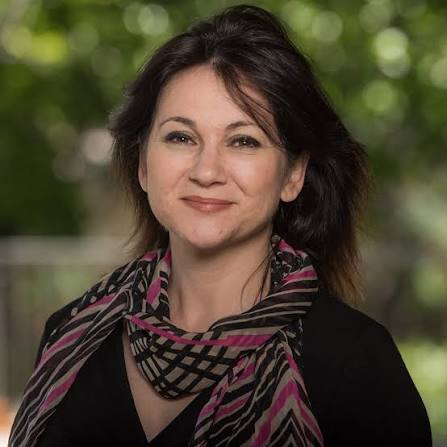
Simona Onori
Stanford University, USA
Title: Built to Last: Tackling Lithium-Ion battery Durability with Modeling, Optimization, and Control
Abstract: Lithium-ion batteries are often treated as fragile assets that fade in ways we cannot fully predict or influence. In this talk, I make the case that battery lifetime can be shaped through modeling, optimization, and control.
I develop this argument across scales, beginning at the electrode and cell level. Here, physics-based modeling, targeted experiments, and optimization provide a framework for understanding how electrode heterogeneity emerges and affects battery lifetime. We show that its evolution can provide an early indicator of accelerated aging, while post-mortem analysis connects this behavior to lithium becoming increasingly trapped within the graphite structure. Together, models, optimization, and experiments make otherwise hidden degradation processes observable.
But a battery in a vehicle is not an isolated cell. It is a controlled system of many inherently different cells. I will present results from a production electric vehicle studied over several years of real-world operation, including two full teardowns in which modules and cells were individually characterized before the pack was reassembled and returned to the road. The cell-to-cell spread remains bounded rather than progressively diverging. The battery management system is central to keeping the pack together. Through balancing, thermal management, and control of the operating limits, it prevents differences among cells from growing over time.
Finally, I turn to second life. We tested retired battery systems and developed machine-learning methods for real-time state-of-health estimation with BIBO stability guarantees, while accounting for operational and deployment constraints. Under the duty cycles of grid service, retired batteries can have substantial life ahead of them. Across electrodes, cells, and packs, and from first to second life, control provides the tools not only to understand battery behavior, but to shape it.
Bio: Simona Onori is Professor of Energy Science and Engineering at Stanford University, with a courtesy appointment in Electrical Engineering. She directs the Stanford Energy Control Laboratory (SECL), is a Senior Fellow at the Precourt Institute for Energy, and serves as Principal Investigator on U.S. Department of Energy battery research projects at SLAC National Accelerator Laboratory. She is also Director of Graduate Studies for the Department of Energy Science & Engineering.
Her research lies at the intersection of systems and control, electrochemistry, and artificial intelligence, with a focus on battery management systems, battery modeling, estimation and control, digital twins, and advanced diagnostics for electric vehicles and grid-scale energy storage.
Dr. Onori is an IEEE Fellow and SAE Fellow, and serves on the Board of Governors of the IEEE Control Systems Society. She is the Editor-in-Chief of the SAE International Journal of Electrified Vehicles, a member of the Executive Committee of the ASME Transportation Systems Development (TSD) Division, and Vice-Chair of the IFAC Technical Committee on Automotive Control. She has held numerous leadership positions across IEEE, IFAC, SAE, and ASME, including serving as Chair of the IEEE Technical Committee on Automotive Controls and as an IEEE Vehicular Technology Society Distinguished Lecturer.
Her research and professional contributions have been recognized with numerous national and international honors, including the 2020 U.S. Department of Energy C3E Women in Clean Energy Mid-Career Research Award, the 2017 National Science Foundation CAREER Award, the 2022 IEEE Transactions on Control Systems Technology Outstanding Paper Award, the 2018 SAE Ralph R. Teetor Educational Award, the 2019 Board of Trustees Award for Excellence at Clemson University, the 2018 LG Energy Solution Global Innovation Contest Award, and the 2024 InspiringFifty Italy Award. She has authored more than 250 peer-reviewed publications, co-authored the textbook Hybrid Electric Vehicles: Energy Management Strategies, and is an inventor on multiple patents in battery modeling, diagnostics, and battery management technologies.
She received her Ph.D. in Control Engineering and her Laurea (combined B.S. and M.S. equivalent) in Electrical and Computer Engineering from the University of Rome Tor Vergata, Italy, and her M.S. in Electrical Engineering from the University of New Mexico, USA.
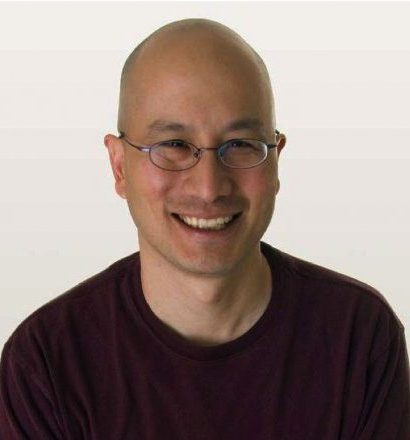
Steve Chien
California Institute of Technology, USA
Title: Trusted AI on Mars
Abstract: In October 2023, the Onboard Planner (OBP) took control of the Perseverance rover on Mars, over 200 million miles from Earth. As of December 2025, OBP has operated for over 400 tactical plans covering over 700 Martian days (sols) and has: executed over 12000 activities requested by scientists and engineers, driven over 20 kilometers, acquired over 100,000 images, and collected more than 10 rock core samples. In contrast to the traditional form of operations, where operators provide a rigid set of instructions for the rover, with OBP Perseverance revises its schedule an average of 16 times each day to stay responsive in a dynamic Martian environment where things don’t always go as expected. This flexibility allows the mission to manage resources such as energy more efficiently and therefore accomplish more science.
In this talk, we discuss the approach to ensuring that a search-based AI system, specifically the Onboard Planner, would (1) achieve mission objectives; and critically (2) protect the rover, a multi-billion-dollar, one-of-a-kind asset. We describe the “whole lifecycle” approach to developing trusted autonomy software for M2020, spanning: conception, design, analysis, prototyping, and testing. We then describe the incremental rollout and training to smooth the transition to operations with increased onboard autonomy. Next, we discuss how the OBP software has improved mission return in quantity and quality in several ways. Finally, we describe the even greater challenges of autonomy in future missions to hunt for life beyond Earth.
Bio: Steve Chien is a Technical Fellow and co-head of the Artificial Intelligence Group at the Jet Propulsion Laboratory, California Institute of Technology, where he leads several efforts in AI/autonomy for spacecraft. Dr. Chien has supported many external bodies including the Defense Science Board, Air Force Scientific Advisory Board, and the US Congress. Dr. Chien was a congressionally appointed member of the National Security Commission on Artificial Intelligence (2018-2021) and a member of the Army Science Board (2022-2025).
Dr. Chien has played a key role in the deployment of AI/Autonomy to numerous space missions including: ASE/EO-1, Sensorweb, Mars Exploration Rovers, ESA’s Rosetta, ECOSTRESS, OCO-3, EMIT, and most recently M2020’s Perseverance Rover at Mars. He is currently the lead for the FAME project which aims to deploy AI to 60 spacecraft.
Dr. Chien has received numerous awards for his work in AI for space including: Lew Allen Award (1995), AIAA Intelligent Systems Award (2011), multiple honors in the NASA Software of the Year Competition (1999, 1999, 2005, 2011), five NASA Medals (1997, 2000, 2007, 2015, 2025), and the ISPRS Li Deren Award for achievement in Spatio-temporal Intelligence (2026).
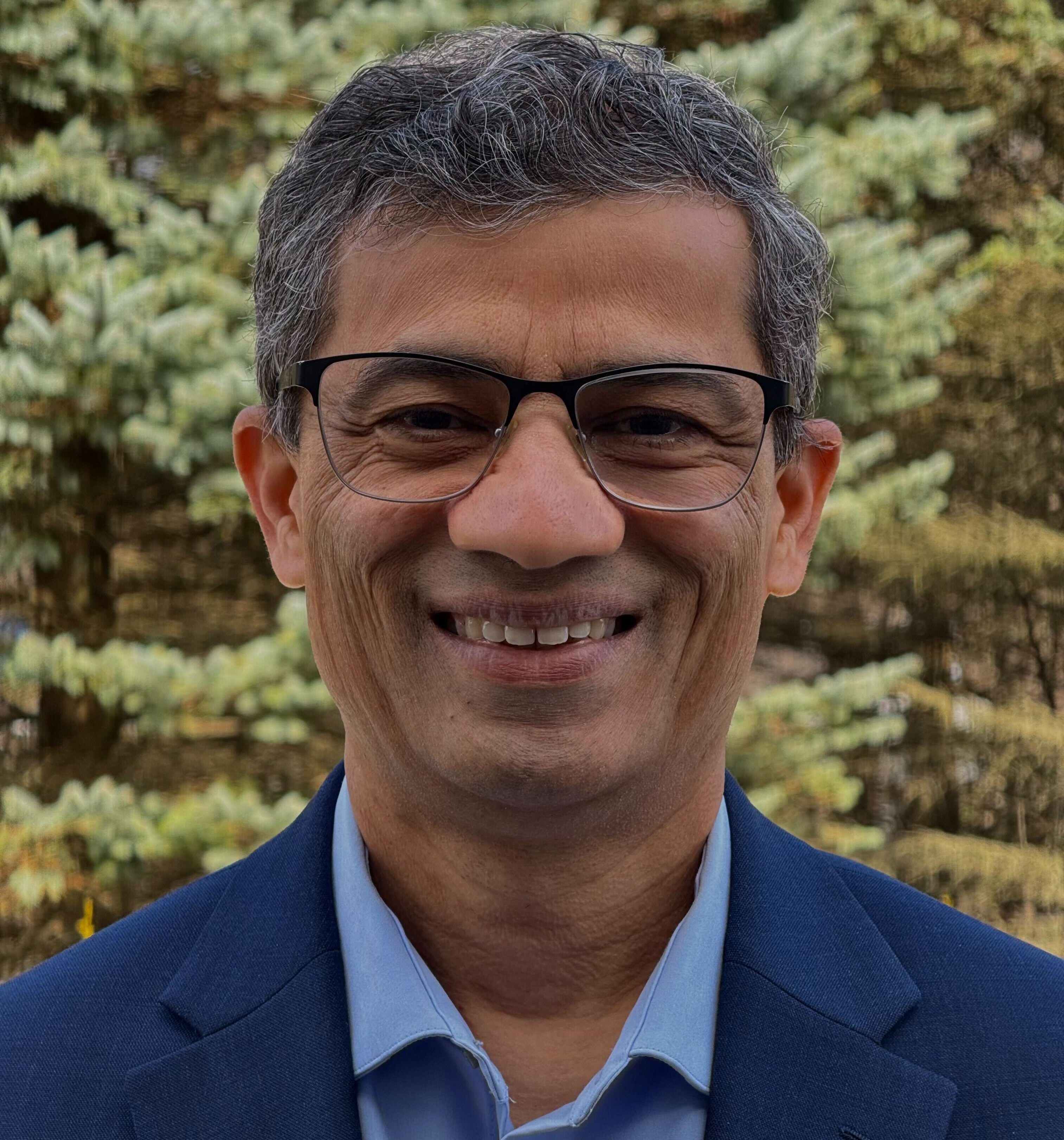
Sanjeev Naik
General Motors, USA
Title: Control of Software-Defined Vehicles: From Models to Agents
Abstract: Automobiles have evolved from largely mechanical systems with limited embedded intelligence into complex, connected platforms defined by software, computation, sensing, and cloud-enabled services. As vehicle architectures have advanced, so too have the modeling and control methods used to design, validate, and operate them. This talk traces that evolution in the context of energy and propulsion systems – from early linear models and classical feedback control to state-space methods, dynamic and nonlinear modeling, model-based design, predictive control, adaptive systems, and emerging AI/ML-based approaches. Automotive control must meet safety, quality, efficiency, and performance constraints, all while ensuring affordability. Robust system integration therefore is key.
Using the systems-engineering V framework, the discussion will examine how models support both requirements decomposition and system integration: translating requirements into architectures, enabling simulation and verification, and closing the loop between design intent and real-world behavior. The talk will then look ahead to the next frontier for software-and-AI-defined vehicles: self-learning models, continuously adaptive control strategies, and agentic systems capable of reasoning across both sides of the V. These developments suggest a future in which vehicles are not merely controlled by software, but are increasingly able to learn, coordinate, and improve throughout their lifecycle.
Bio: Dr. Sanjeev Naik is Director of Energy & Propulsion Systems Research at GM, overseeing R&D in electric drives, power electronics, engine technology, battery & energy systems, propulsion architectures, thermal systems, aerodynamics, controls and prognostics. He has over 25 years of industry leadership and engineering experience in the development of advanced technologies in electrification, propulsion, and control systems for EV and ICE vehicles.
Sanjeev has a Bachelor of Technology in Electrical Engineering from Indian Institute of Technology, Mumbai, master’s in electrical engineering from University of Michigan, PhD in Electrical Engineering from University of Illinois, Urbana-Champaign, and an MBA from University of Michigan, Ann Arbor.
Sanjeev is an IEEE Senior Member, an SAE Member, has over fifty patents, several publications & presentations, and has been a recipient of GM’s Boss Kettering award for outstanding innovation.

