
DSCD Careers After Ph.D.: Career Pathways and Perspectives
Date & Time: Tuesday, October 27, 16:00 – 17:30
Location: Colonnade
Organizers:
Kaiyan Yu, Hossein Rastgoftar
Session Details:
This special session is designed to provide graduate students, postdoctoral researchers, and early-career professionals with insights into career opportunities following the Ph.D. Through a panel of distinguished speakers from academia, industry, and national laboratories, participants will gain first-hand perspectives on career pathways, professional development, and the skills needed to thrive in different sectors.
A central theme of this year’s session is the changing value of a Ph.D. as AI becomes capable of performing more technical work. As AI tools take on coding, analysis, simulation, and parts of research discovery, what distinguishes a Ph.D. graduate, and which capabilities will matter most over the next five to ten years? Panelists will address how AI is reshaping hiring expectations, where it genuinely helps in controls, dynamics, and robotics, and where physical constraints, uncertainty, stability, and safety still demand human engineering judgment.
The session is organized into two parts. Part I: Career Pathways After the Ph.D. covers career transitions, what transfers from doctoral training and what does not, hiring expectations across sectors, and the trade-offs between academia, industry, and national laboratories. Part II: Perspectives on Professional Development and Inclusion focuses on mentorship, building a professional network, belonging and support in research environments, and whether AI will make career development more accessible or create new barriers.
The event will include moderated discussions and ample time for audience questions, providing attendees with practical guidance for navigating their professional careers and building successful long-term trajectories in engineering and research.
Moderator: Kaiyan Yu
Dr. Kira Barton
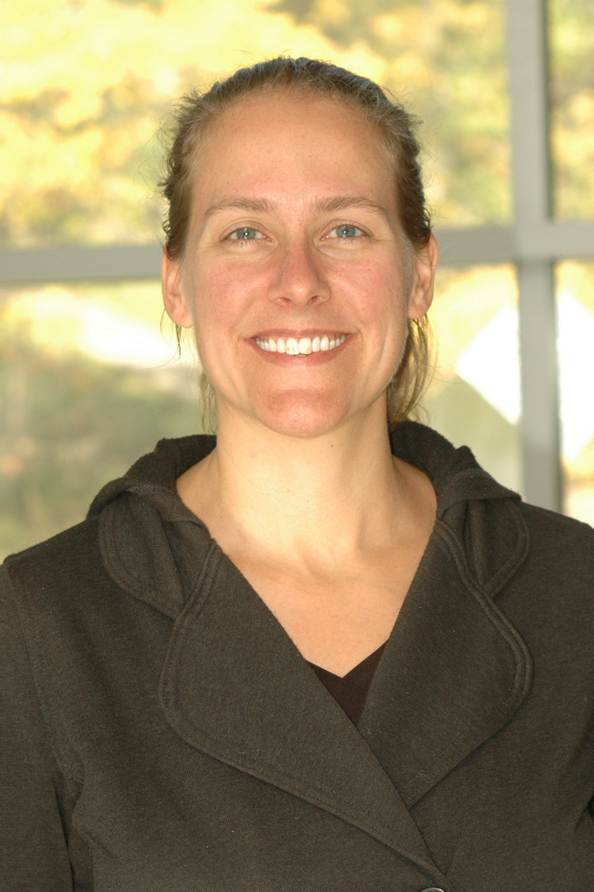
Bio: Kira Barton is a Professor of Robotics and Mechanical Engineering at the University of Michigan and Associate Director of the Automotive Research Center. Her research advances modeling, sensing, and control for smart manufacturing and robotics, with an emphasis on learning and multi-agent systems. Her honors include an NSF CAREER Award, the ASME Dynamic Systems and Control Young Investigator Award, and recognition by SME as a leader transforming manufacturing. She was named an ASME Fellow in 2024.
Dr. Stephanie Stockar
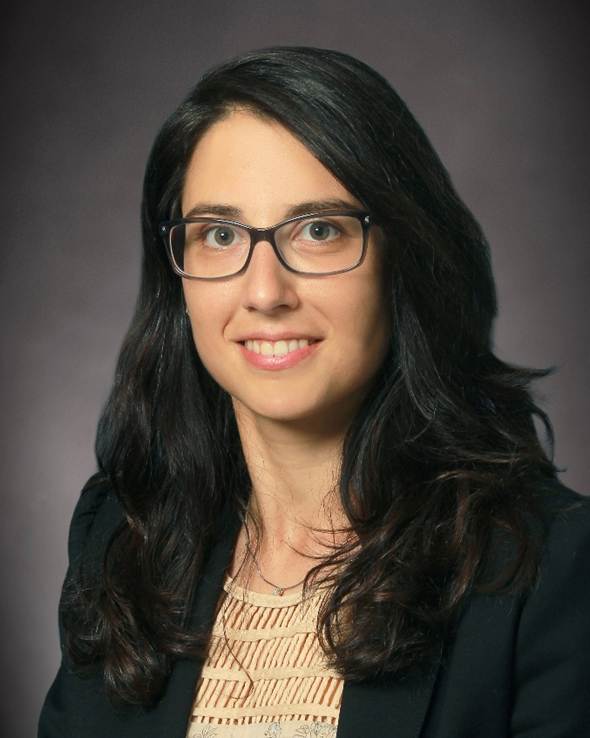
Dr. Stephanie Stockar is an Associate Professor in the Department of Mechanical and Aerospace Engineering at The Ohio State University, where she directs the Control and Optimization for Sustainable Technologies (COST) Lab. She is also an affiliated faculty member of the Center for Automotive Research and the Sustainability Institute. She received her PhD in Mechanical Engineering from Ohio State in 2013 and her BS and MS in Mechanical Engineering from ETH Zurich, Switzerland, in 2007 and 2010, respectively. Before joining Ohio State in 2019, she was an Assistant Professor at Penn State University.
Dr. Stockar’s research focuses on modeling, control, and optimization of complex dynamical systems, with an emphasis on large-scale, distributed, and infinite-dimensional systems. Her work combines physics-based modeling, mathematical control theory, optimization, and data-driven learning. Research directions include constrained and safety-critical optimal control, in-domain control of systems governed by partial differential equations, and operator-theoretic methods for nonlinear modeling and control. Applications span transportation and mobility, electrified and autonomous systems, distributed energy and thermal systems, manufacturing, and the built environment.
Her research has been supported by the National Science Foundation, the U.S. Department of Energy, ARPA-E, and automotive industry partners. She received the NSF CAREER Award and the SAE Ralph Teetor Educational Award in 2021, and the Ralph E. Powe Junior Faculty Enhancement Award in Engineering and Applied Science in 2020.
Dr. Joseph (Yossi) Cohen
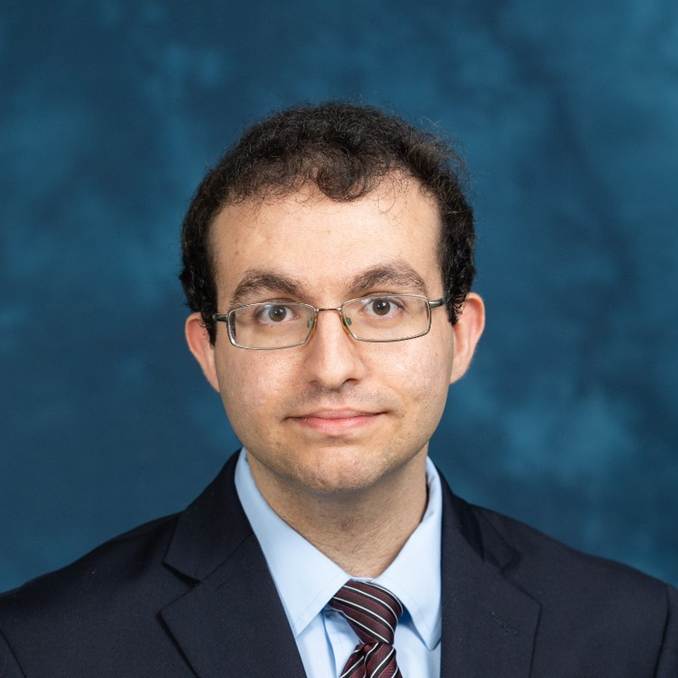
Bio: Joseph (Yossi) Cohen is an Assistant Professor in the Department of Mechanical and Aerospace Engineering at Rutgers University. He received his Bachelor’s, Master’s, and Ph.D. degrees in Mechanical Engineering from the University of Michigan. His research interests include human-centered augmented intelligence, responsible artificial intelligence in industry, and sustainable manufacturing. Before joining Rutgers, he was a Schmidt AI in Science Postdoctoral Research Fellow at the Michigan Institute for Data and AI in Society, where he investigated explainable artificial intelligence alongside uncertainty quantification to improve the reliability of model explanation methods. At Rutgers, his Trustworthy, Robust, and Understandable SysTems in Mechanical Engineering (TRUST-ME) Lab has focused on developing explanation methods for physical AI systems compatible with industrial automation systems, robotics, as well as biological systems.
Dr. Aliasghar Arab

Bio: Dr. Aliasghar Arab is a Research Professor at The City College of New York and NYU Tandon School of Engineering, Director of ASAS Labs, and Co-founder of General Autonomy Inc. His work focuses on safe control, planning, and verification of autonomous systems. His career spans academic research, industry R&D at Nokia Bell Labs, Nuro, and Verizon, and entrepreneurship developing AI-assisted safety validation tools. He earned his Ph.D. in Mechanical and Aerospace Engineering from Rutgers University and is an IEEE Senior Member.
Dr. Shobhit Gupta

Bio: Dr. Shobhit Gupta is a Senior Controls Researcher in the Energy & Propulsion Systems Research Lab at GM R&D in MI, USA. He received his B.Tech. In Mechanical Engineering from the Indian Institute of Technology Guwahati (2017), followed by an M.S. (2019) and Ph.D. (2022) in Mechanical Engineering from The Ohio State University, focusing on predictive energy optimization for connected vehicles.
At GM, his work centers on physics-informed data-driven estimation, dynamic optimization, and predictive controls for EV fast charging, battery management systems, and connected electrified propulsion systems. His technical impact includes 30+ publications, 10+ U.S. patents (two of which are in active use at GM), and 13 trade secrets contributed to the company. He is an active member of SAE, ASME, and IEEE, and serves as the Industry Liaison Chair for the IEEE Transportation & Electrification Conference (ITEC) and the ASME Automotive Transportation Technical Committee (2025–26). His honors include the ASME Rising Star Researcher Award (2021) and ASME Best Paper Finalist designations in 2022 and 2025.
Dr. Jonathon E. Slightam

Bio: Jonathon received his B.S. degree in Mechanical Engineering and M.S. degree in Engineering from the Milwaukee School of Engineering in 2012 and 2014, respectively, where he specialized in the design of additively manufactured fluid power robots. Jonathon attained his Ph.D. in 2018 from Marquette University where he studied model-based nonlinear control of soft fluidic actuators. In 2019, he joined Sandia National Laboratories’ Unmanned Systems and Autonomy Research and Development organization as a Postdoctoral Appointee, later becoming a Senior Member of Technical Staff, and later into his current position as a Principal Member of Technical Staff. Jonathon has spearheaded autonomous manipulation efforts for field robotics and flexible advanced manufacturing for small batch manufacturing during his tenure at Sandia.

