
MoViC 2026 Plenary Talks
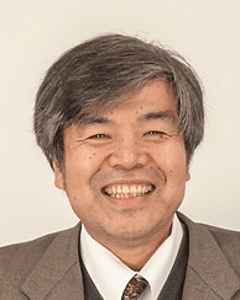
Professor Toru Watanabe
Nihon University, Japan
Title: Recent Advances in Connected Control Method for High-Rise Buildings at Watanabe Lab
Abstract: Connected Control Method (CCM) is a vibration suppression mechanism for high-rise buildings by coupling plural buildings via vibrational elements such as dampers and/or springs. The effectiveness of CCM is already confirmed and put into practical use for “Harumi Triton Square” building complex in Tokyo Bay area. However, CCM possess two technical difficulties: No damping effect is expected when applied to identical buildings because no relative motion is aroused, and huge stress concentration appears on connecting points due to huge reaction force. Recently a novel CCM mechanism utilizing a Tuned Mass Damper (TMD) as the connecting vibration element instead of simple dampers and/or springs is presented. Due to the existence of auxiliary mass of TMD, certain level of vibration suppression effect is realized even when applied to two identical buildings. It is also confirmed that the vibration suppression effect of the presented CCM is larger than that of simple TMD. This fact clearly shows the TMD works as a part of CCM. Based on this idea, further ideas to expand the performance of TMD are applied to this novel CCM. It is already known that Tuned Multi-Mass Damper (TMMD) of which the auxiliary mass of ordinary TMD is divided into plural smaller masses achieves higher vibration suppression performance than the ordinary TMD. Based on this fact, a TMMD is introduced to the novel CCM as the alternative connecting mechanism and the better performance is achieved. Furthermore, to derive the optimal parameters for connecting TMMD, analytical parameter optimization procedure based on H-infinity control theory is applied to this novel CCM and it showed good results. According to the above results, the superiority of the novel CCM utilizing TMMD is confirmed. The next challenge is to ease stress concentration by introducing multiple TMMDs to plurality of connecting locations.
Bio: Prof. Toru Watanabe was born on June 21, 1966, Japan. He graduated from the Department of Mechanical Engineering, Keio Univ. in 1989 and earned his Ph.D from Keio Univ. in 1994. He joined the faculty of Keio Univ. in 1994 and moved to Nihon Univ. in 2000. His current occupation is a professor of the Department of Mechanical Engineering , College of Science and Technology, Nihon Univ. He had been a visiting scholar of University of Notre Dame, IN during Sep. 2001- Aug. 2002. His research interest lies in the field of motion and vibration control of mechanical systems, especially on the active or passive structural control, development of active seismometer, development of large-scale lightweight robot, active noise cancelling in open-air environment, and application of control theories to vibration control. He is a member of Japan Society of Mechanical Engineers (JSME), Society of Instrumental and Control Engineers (SICE), and Architectural Institute of Japan (AIJ).
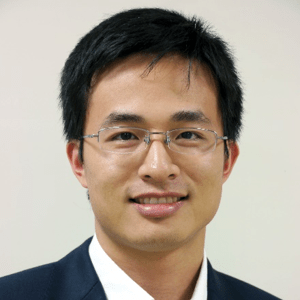
Professor Xu Chen
University of Washington Seattle, USA
Title: From Vibration to Physics-Aware AI for Robotics & Manufacturing: Crafting the Scenarios and Features for High-Impact AI
Abstract: While AI offers exciting avenues for robotics and manufacturing, such safety-critical applications as aerospace and precision mechatronics necessitate reliability, interpretability, and performance under data constraints. This talk will discuss how high-impact AI solutions emerge from physics-aware scenario engineering and feature design. By integrating principles of vibrations, manufacturing processes, dynamic systems and controls, and material behavior, the proposed framework guides key stages from data acquisition to model learning. We will present examples demonstrating how this synergy of system-centric domain-specific feature engineering and structured data collection enables us to exceed the capabilities of conventional machine learning and human perception, particularly for: 1) high-precision vibration rejection in uncertain environments, 2) robotic defect localization and assessment for high-mix manufacturing, and 3) overcoming persistent challenges in slip detection for robotic grasping.
Bio: Xu Chen is the Bryan T. McMinn Endowed Associate Professor of Mechanical Engineering at the University of Washington, Seattle. He received his bachelor’s degree in mechanical engineering from Tsinghua University, Beijing, China, in 2008, and the M.S. and Ph.D. degrees in mechanical engineering from UC Berkeley in 2010 and 2013, respectively. His research encompasses dynamic systems and controls, robotics and AI, advanced manufacturing, and precision mechatronics. His accolades include the NSF CAREER Award, the SME Outstanding Young Manufacturing Engineer Award, the IFAC Mechatronic Systems Outstanding Young Researcher Award, and seven best papers with his students. At UW, he directs the Boeing Advanced Research Collaboration (BARC) at UW, a unified umbrella overseeing a strategic research collaboration between UW and Boeing. He also chairs UW’s Robotics Visioning Committee, an effort across nine engineering departments and the business school to shape the future of UW robotics education and research. Outside of UW, he is an advisor to the UK’s EPSRC Centre for Doctoral Training in Digital Engineering at the University of Sheffield, and has served to organize major domain conferences for over 10 times. He is an author of the book “Introduction to Modern Controls — with Illustrations in MATLAB and Python (2024),” which provides over 1,000 lines of open-source code to bridge theory and practice of modern controls with Python, along with over 1,000 pages of freely available course notes and slides.

